Resume of Chris Nadovich, Ph.D.
- (click to send email)
- Voice Phone
- +1.336-422-6239
For latest resume, browse
http://www.nadovich.com/chris/resume.html
Chris Nadovich is a senior systems architect, developer, and engineering project team leader with diverse experience and a track record of success. He will consider any opportunity to guide complex, interdisciplinary engineering efforts.
Biography
Dr Nadovich has worked in industry for over 30 years, serving as lead engineer guiding ground-up development of a number of sophisticated signal processing systems, including Software Radios, SuperResolution Direction Finding systems, Microwave and RF Measurement systems, and specialized Monopulse and SAR radars. This work gave him extensive experience in both hardware and software, including RF/Analog design, signal processing, test, and measurement from DC to 200 THz, and real time DSP using high performance digital systems and embedded software. In addition to being a skilled RF, microwave, and board-level electronics developer with a fresh skill-set on state of the art tools, Nadovich is also an experienced engineering team leader and project engineer, having worked in various supervisory roles, coordinating the work of individuals and subcontractors.While working in industry as an engineer in the late 1980's and early 1990's, Nadovich was also a competitive bicycle racer. In 1994, Nadovich, united his skills as an engineer with his love for bicycle racing when in he designed the velodrome for the 1996 Olympic Games. The 250 meter track has 42 degree banking in the curves and a proprietary shape designed by Nadovich using a hybrid symbolic/numerical model implemented in Mathematica and based on the theory of the Fresnel integral. The track was temporarily installed at the Stone Mountain Cycling and Archery Venue near Atlanta Georgia for use in the 1996 Olympic games. To date, Nadovich has been the designer of over a dozen velodromes worldwide. He continues to be an active cyclist and has completed the 1240 km Paris Brest Paris randonnée.
Since then Nadovich has continued his work in DSP, RF, and Microwave engineering as an independent consultant, along with several Internet and Software related projects in conjunction with operating the ISP, JTAN.COM. These projects include contributions to the open source community.
Nadovich has written a book to help advance the state of the art in software-defined automated instrumentation. The book: Synthetic Instruments, Concepts and Applications was published by Elsevier in 2004.
Nadovich received a Ph.D. from Clarkson University in 2018 with a dissertation on nanophotonic devices and optical vortices. The "Forked Grating Coupler" invented by Nadovich as part of his thesis research was granted a US Patent in 2017. Nadovich received BSEE and MEEE degrees from Rensselaer Polytechnic Institute in 1981 with a thesis in network theory and finite element analysis.
These days, along with his nanophotonic research, and occasional consulting on RF/Microwave design, FCC
compliance testing, DSP, and Board Level layout and design, Nadovich
is Director of Laboratories at Lafayette College in Easton, PA. His
main responsibility is managing teams of young
engineers engaged in multidisciplinary capstone projects
(
'14,
'15,
'16,
'17,
'18,
'19).
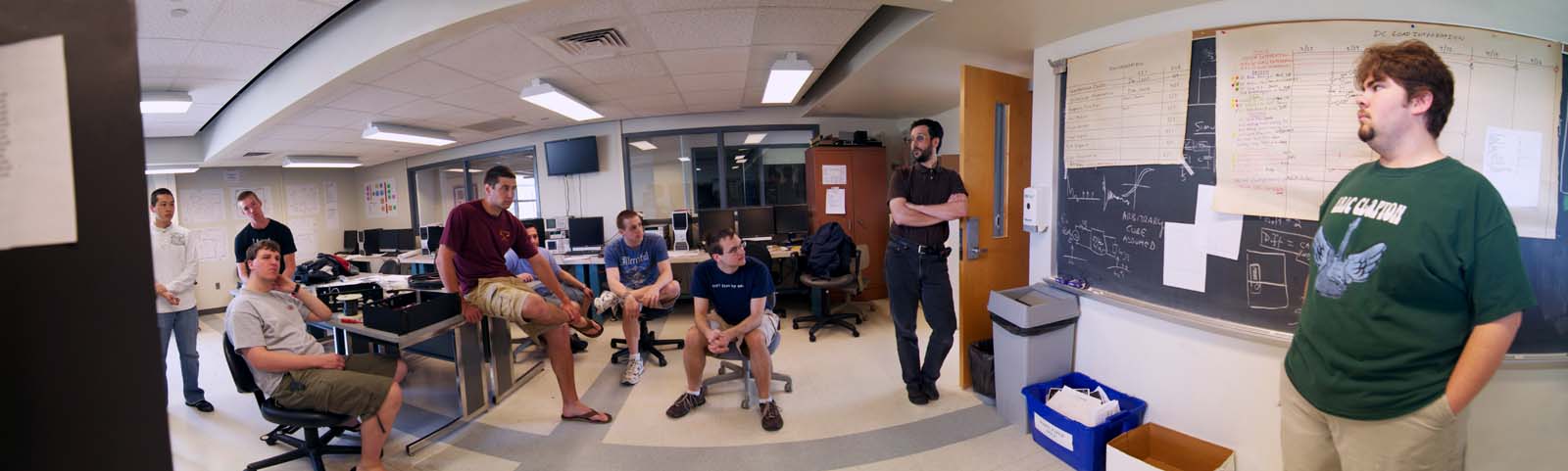
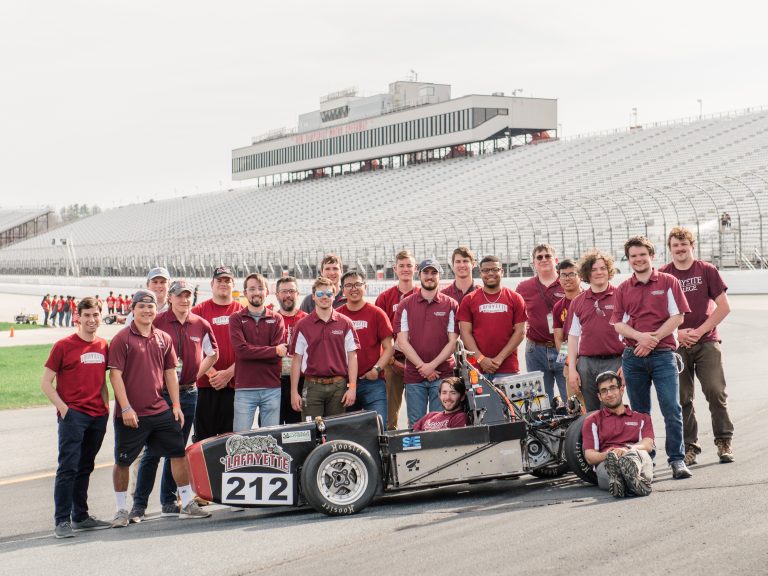
The 2018 capstone project was the direct result of Nadovich coordinating and concatenating six years work with ten
different, non-overlapping student teams in two different disciplines (EE and ME).
These efforts culminated in Lafayette's electric racecar entry that successfully passed
stringent tech inspections and qualified to race at the 2018 Formula
Hybrid competition in New Hampshire Motor Speedway, taking 4th place out
of 10 teams in the full electric division.
Skills
Analog, RF, and Microwave Systems
Nadovich has decades of experience with cutting edge hardware development. He
has
designed and integrated modern RF and analog components in surface
mount, stripline, coaxial, and waveguide assemblies, working at
frequencies from DC to 94 GHz and power levels from thermal noise to 10
kilowatt CW. He has used RF/Analog EDA and Simulation tools including
PSPICE, COMSOL Multiphysics, CST Microwave Studio, Ansys, Sonnet, and Eagleware.
Nadovich has developed several radar systems, including
monopulse trackers,
active phased arrays, and
 SAR imaging systems, and high-speed analog control systems for adaptive antennas and
interference cancelers. Most recently he has been working on a high
speed automated test system in a tablet form-factor,
including detailed design of
an ultra-compact microwave receiver and exciter.
SAR imaging systems, and high-speed analog control systems for adaptive antennas and
interference cancelers. Most recently he has been working on a high
speed automated test system in a tablet form-factor,
including detailed design of
an ultra-compact microwave receiver and exciter.

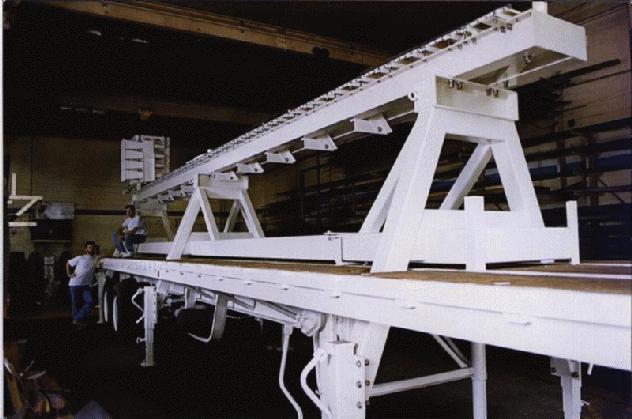
These high performance digital systems had
extensive Digital Signal Processing (DSP) and Software Defined Radio (SDR)
capabilities,
including FIR and IIR digital filters, FFT and Wavelet
transforms, decimation, interpolation,
and multidimensional signal processing algorithms.
Christopher T. Nadovich, William D. Jemison, Derek J. Kosciolek, and David T. Crouse, "Focused apodized forked grating coupler," Opt. Express 25, 26861-26874 (2017)
C. T. Nadovich, D.J Kosciolek, W.D. Jemison, and D. T. Crouse, ``Multiplexing of adjacent vortex modes with the forked grating coupler'', Presented at SPIE Optics and Photonics Conference, San Diego, CA, August 2017.
C. T. Nadovich, D.J Kosciolek, W.D. Jemison, and D. T. Crouse, ``Vortex Mode Multiplexing with the Forked Grating Coupler'', Presented at OSA Advanced Photonics Conference, New Orleans, LA, July 2017.
C. T. Nadovich, D.J Kosciolek, W.D. Jemison, and D. T. Crouse, ``Apodization Design for the Focused Forked Grating Coupler'', Presented at Photonics North, Ottawa, CA, June 2017.
T. Wey and C. Nadovich, "On Lossy Memristive Behavior of Metal Conductors," in IEEE International NEWCAS Conference, 2016, vol. 2, no. 1, pp. 0-3.
C. T. Nadovich, D.J Kosciolek, W.D. Jemison, and D. T. Crouse, ``Forked Grating Coupler Optical Vortex Beam Interface for Silicon Photonics'', Presented at SPIE Optics and Photonics Conference, San Diego, CA, August 2016.
C.T Nadovich, W.D. Jemison, D.J. Kosciolek, D.T. Crouse,
"Forked Grating Coupler Optical Vortex Beam Interface for Silicon Photonics," Presented at The Photonics North Conference, Quebec City, CA 2016.
C. T. Nadovich, D.J Kosciolek, W.D. Jemison, and D. T. Crouse, "Simulation Of Vector Mode Grating Coupler Interfaces For
Integrated Optics." Presented at COMSOL
Conference, Boston, MA, 2015.
C. T. Nadovich, D.J Kosciolek, W.D. Jemison, and D. T. Crouse, "Forked grating
coupler optical vortex beam interface for integrated optics", presented at
the Third International Conference on Optical Angular Momentum, New
York, N.Y., 2015.
D. J. Kosciolek, C. T. Nadovich, D. T. Crouse, and W.D. Jemison, "SOI Forked Grating
Coupler for Integrated Optics: Fabrication Tolerances and Efficiency
Improvements for Coupling into a Single Mode Fiber", presented at META'15, the
6th International Conference on Metamaterials, Photonic Crystals and
Plasmonics, New York, N.Y., 2015.
C. T. Nadovich, W. D. Jemison, J. A. Stoute, and C. Spadafora,
"Microwave Exposure System for In Vitro and In Vivo Studies." presented
at COMSOL
Conference, Boston, MA, 2014.
L. M. Coronado, C. T. Nadovich, and C. Spadafora, "Malarial
hemozoin: From target to tool", Biochimica et Biophysica Acta (BBA) -
General Subjects, June 2014
J. A. Nestor and C. T. Nadovich, "An FPGA-Based Wireless Network Capstone
Project", Proceedings International Conference on Microelectronics
Systems Education, July 2009.
C. T. Nadovich; D. Kaplan, J. Davis, and M. Montgomery, "Descriptive
development system for true instrument synthesis", Autotestcon, 2007
IEEE, Sept. 2007
C.T. Nadovich, Synthetic Instruments: Concepts and Applications,
Elsevier/Newnes, 2004.
C. T. Nadovich, D. R. Frey, T. Schmitthenner, D. Hess, "The Stimulus
Hardware Emulator (SHE) proof of concept," IEEE
Systems Readiness Technology Conference, 1999.
DSP and Software Defined Radio
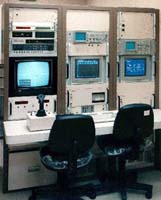
 Nadovich, an expert up/downconverter designer,
was one of the first engineers in the world to
create a detailed design for
a Software Defined Radio. He is particularly
experienced in real-time DSP
multiprocessing, having designed two
significant multiprocessor DSP systems: one, a radar control system
comprising over 15000 lines of C code executing on three Intel X86
processors, the other a Software Radio array with forty-nine
TMS-320 processors in concurrent operation. More recently Nadovich
has designed FPGA based packet modems, synthetic test and measurement
systems, and other software defined radio and DSP intensive systems.
Nadovich, an expert up/downconverter designer,
was one of the first engineers in the world to
create a detailed design for
a Software Defined Radio. He is particularly
experienced in real-time DSP
multiprocessing, having designed two
significant multiprocessor DSP systems: one, a radar control system
comprising over 15000 lines of C code executing on three Intel X86
processors, the other a Software Radio array with forty-nine
TMS-320 processors in concurrent operation. More recently Nadovich
has designed FPGA based packet modems, synthetic test and measurement
systems, and other software defined radio and DSP intensive systems.Nanophotonics
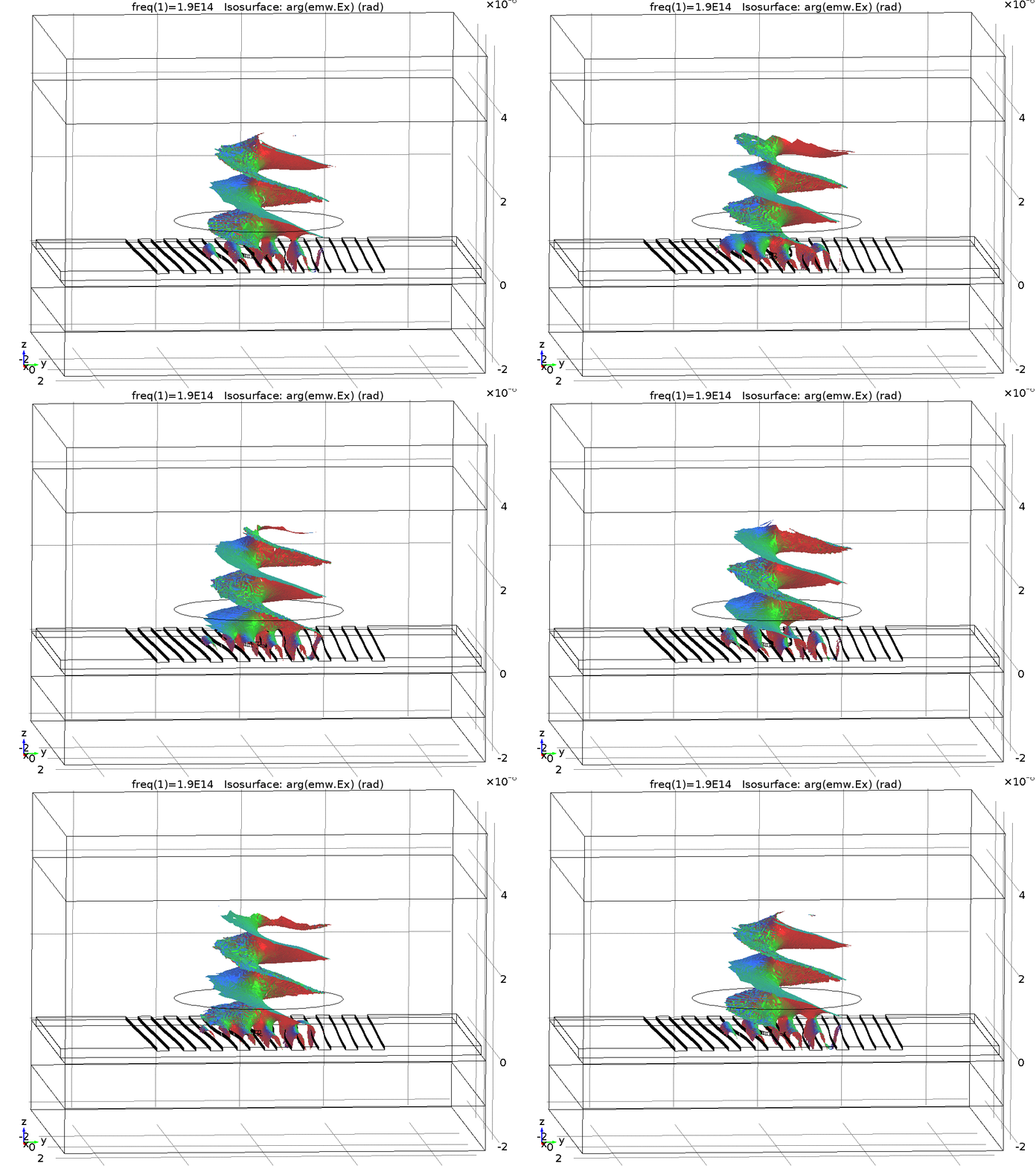 Nadovich has designed, fabricated, and tested various nano-scale optical devices
for integrated optics applications on silicon, including waveguides, power dividers,
couplers, fiber-grating couplers and interferometers. He invented the
novel forked grating coupler (FGC), which provides a selective and sensitive
means of interfacing optical vortex beams directly with a photonic integrated circuit.
Combining the proven idea of a grating coupler with a forked hologram, the FGC structure is an easy-to-fabricate device that selectively and efficiently couples optical vortex
modes to or from dielectric waveguide "wires" on a photonic IC. The FGC naturally retains many advantages of ordinary, non-vortex Bragg couplers, including convenience
of placement on the die, low profile, simple fabrication, reasonable bandwidth, small
size commensurate with optical fiber mode-field diameters, and CMOS fabrication process compatibility.
Nadovich has designed, fabricated, and tested various nano-scale optical devices
for integrated optics applications on silicon, including waveguides, power dividers,
couplers, fiber-grating couplers and interferometers. He invented the
novel forked grating coupler (FGC), which provides a selective and sensitive
means of interfacing optical vortex beams directly with a photonic integrated circuit.
Combining the proven idea of a grating coupler with a forked hologram, the FGC structure is an easy-to-fabricate device that selectively and efficiently couples optical vortex
modes to or from dielectric waveguide "wires" on a photonic IC. The FGC naturally retains many advantages of ordinary, non-vortex Bragg couplers, including convenience
of placement on the die, low profile, simple fabrication, reasonable bandwidth, small
size commensurate with optical fiber mode-field diameters, and CMOS fabrication process compatibility.
Skill-Set Key Words
3D A/D AFM APL ATE AVR Absorption Adaptive Adaptive-Array Altium
Analog Analyzer Antenna Ansys Apache Aperture Assembler AUT Biological Board
Beamformer BER BMS BSD Broadband Butterworth C C++ CAD Capacitor CASS
Cellular Chirp Circuit CISPR Clearance CLR Chebyshev Commercial
Compact-Range COMSOL Control Convolution CPLD CST D/A DAC Design Delay
DF Dipole Dielectric DNS DSP Digital DxDesigner E-Beam ECCM ECM Electromagnetics EMC
Embedded EMI Feed FET FCC Fiber FIR Filter FMCW FORTH Fourier FPGA Firmware
Gaussian GCC GPS Grating 68HC11 High-Power HFSS HTML HF Horn IIR IGBT Infrared ISAR ISP
Impedance Internet Inverter Inductor Instrument Integral ISM IVI Java
JPEG Kalman Filter Laplace Laser Layout Linux LiFePO4 Lumerical
Measurement Microstrip MIMO MPEG MUSIC Magnetic Mathematica Matching Matlab
Metrology Microwave Millimeter-Wave Microcontroller Military Monopulse
Multiphysics MySQL Nanotechnology Nanoparticle Nanophotonic
Network Numerical OAM Op-Amp Optical Optics PC104 PAL
Patch PIC PCB PHP Part-15 Perl Photovoltaic Photonic Positioner Power Phase
Phased-Array Pulse PWB Python RF Radar RCS Reed Solomon Resistor Reactance Reflection
Reflector Resonator Rogers 4003 SAR Scalar Sensor Silicon Simulink SLM Smart-Antenna
Software SOI Specific-Absorbtion-Rate Spread-Spectrum Stripline
Surface-Mount Sonnet Spartan Super-Resolution Synthesizer Synthetic
Systems TCP/IP Test TeX TMS-320 Theodolite TR-Module UART Ubuntu UHF
VHF Verilog Velodrome Video VHDL Verilog Vortex VSWR WLAN Wi-Fi Waveguide
X-band Xilinx Yagi XML Z-World 2G 3G 4G 5G 8051 6805
Publications

Chronological CV
Amplifier Research, Souderton, PA (2016 - 2017)
Consulted on the design and FPGA implementation of various software defined receiver power detectors
(e.g. average, peak, quasi-peak) that meet CISPR measurement standards.
Williams USA (2012 - 2014)
Developed a low cost, high speed, frequency agile, short packet
modem for a 2.4 GHz industrial radio control application.
The modem integrates Reed Solomon forward error correction,
along with a zero IF software radio on a Spartan 6 FPGA platform.
Venture Technologies, Bilerica, MA (2009 - 2012)
Preformed a research study and empirical measurements for proof of
principle in an FMCW application.
Developed Verilog cores for FPGA logic to perform DSP and video signal measurements
on a handheld test instrument made by Spirent.
Clarkson University, Potsdam, NY (2009 - Present)
Contributed to two large research projects. First, a project supported by the Bill and Melinda Gates foundation tasked with determining the efficacy of microwave radiation for killing malaria parasites. Second, a project supported by the Industry/University Cooperative Research Center for Metamaterials tasked with developing low-profile, nano-scale structures that interact with optical vortices.Lafayette College, Easton, PA (2008 - Present)
 Director of Laboratories in the Electrical and Computer Engineering
Department. Teaches various courses and labs, including the ECE
senior-level capstone design course. The
teaching work for capstone design involves managing multiple groups
of young engineers in
team-oriented, multidisciplinary projects. Some project
examples include a Formula
Electric Vehicle, an
autonomous boat for hydrologic measurement, photovoltaic energy system and a LiFePO4 cell
management system.
Director of Laboratories in the Electrical and Computer Engineering
Department. Teaches various courses and labs, including the ECE
senior-level capstone design course. The
teaching work for capstone design involves managing multiple groups
of young engineers in
team-oriented, multidisciplinary projects. Some project
examples include a Formula
Electric Vehicle, an
autonomous boat for hydrologic measurement, photovoltaic energy system and a LiFePO4 cell
management system.
Pallas Systems, Columbus, OH (2006-2008)
 Technical lead engineer at startup company creating a synthetic
measurement hardware platform in a tablet-sized form factor. The
system, incorporating a touch screen, CPU, and high speed A/D/A with
flexible conditioning, can make sophisticated stimulus-response analog measurements from DC to microwave
frequencies with a dual-channel coherent up and down
converter integrated into this device.
Technical lead engineer at startup company creating a synthetic
measurement hardware platform in a tablet-sized form factor. The
system, incorporating a touch screen, CPU, and high speed A/D/A with
flexible conditioning, can make sophisticated stimulus-response analog measurements from DC to microwave
frequencies with a dual-channel coherent up and down
converter integrated into this device.
Orbit/FR, Horsham, PA (2005)
Project Engineer coordinating the installation of new Compact Range
equipment, including a multi-band scalar feed carousel, and a
multi-segment machined aluminum reflector. Work included managing the civil
survey, construction,
installation, mechanical alignment using a coherent laser radar,
and RF field probing the final system for acceptance testing.

Graco, Exton, PA (2005)
Consulted on FCC Part 15
Verification and Certification issues for an intentional-radiator product.
Schulmerich Bells, Sellersville, PA (2004)
Consulted on FCC Part 15, IC, and EC
Verification and Certification issues for intentional-radiator products.
Designed various antennas for hand held wireless products.
Access Research, St Louis, MO (2003)
Designed a propagation channel simulator matrix for automated testing of
multiple RF communications devices.
Lambda Sciences, Villanova, PA (2002)
Designed an L-band multi-channel phase tracking radar receiver.
KVH Industries, Middletown, RI (2001)
Designed a low cost X-band LNA for a commercial phased array
application.
Lambda Sciences, Villanova, PA (2001)
Designed a 6 channel X-band receiver for a switched SAR/Chirp
instrumentation radar.
Aeroflex-Lintek, Powell, OH (2000)
Designed numerous RF upconverter and downconverter circuits in
microstrip as part of an overall redesign of a
synthetic instrumentation system. Was a key
software and hardware architect of this system and participated in
numerous technical and marketing decisions based on extensive
conversations with customers and in collaboration with sales and
engineering personnel.
Olympic Velodrome, Atlanta GA (1994 - 1996)
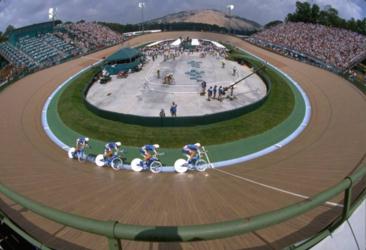 Co-authored a winning technical proposal for the construction of a 250 meter
velodrome for the 1996 Olympics.
The track has 42 degree banking in the curves and a proprietary shape
designed by Nadovich using a hybrid symbolic/numerical model
implemented in Mathematica and AutoCAD and based on the theory of the
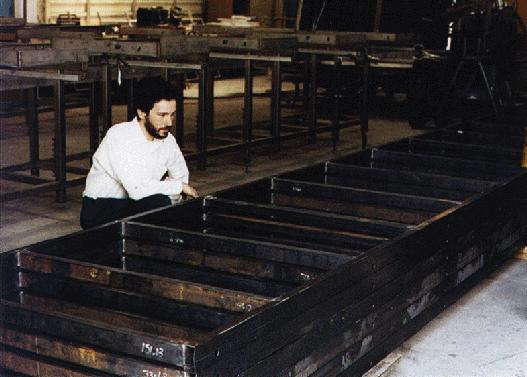
Fresnel integral. Comprising over 75 tons of structural steel
framework, the track was fabricated on a tight schedule at C.H. Landis
Company (Souderton, PA) under Nadovich's
supervision. It was temporarily
installed at the Stone Mountain Cycling and
Archery Venue near Atlanta Georgia for use in the 1996 Olympic games. To
date, Nadovich has designed over a dozen velodromes around the world.
Co-authored a winning technical proposal for the construction of a 250 meter
velodrome for the 1996 Olympics.
The track has 42 degree banking in the curves and a proprietary shape
designed by Nadovich using a hybrid symbolic/numerical model
implemented in Mathematica and AutoCAD and based on the theory of the
Fresnel integral. Comprising over 75 tons of structural steel
framework, the track was fabricated on a tight schedule at C.H. Landis
Company (Souderton, PA) under Nadovich's
supervision. It was temporarily
installed at the Stone Mountain Cycling and
Archery Venue near Atlanta Georgia for use in the 1996 Olympic games. To
date, Nadovich has designed over a dozen velodromes around the world.
Ultrafast, Malvern, PA (1995)
Analog design consultant supporting the introduction of a new, enhanced version of an ultrasound system for measuring the torque applied to fasteners. Consulted on transceiver design and the design of matching networks.
Digital Video Arts, Dresher, PA (1995 - 1996)
Developed microcode to perform Wavelet based data compression algorithms on NTSC/PAL video using the VCP a high performance SIMD architecture computing element.
Checkpoint Systems, Thorofare, NJ (1995)
Hardware/Software consultant supporting the introduction of a new, cost-reduced version of an electronic security product built with several TMS-320, Neuron, and 80188 microprocessors, various FPGA's and PLD's, and analog/RF circuitry. As part of his work, Nadovich wrote code for each of the embedded processors, including a portable FORTH compiler written in C that was used as a diagnostic scripting facility.
Flam & Russel, Horsham, PA (1984 - 1995)
R&D Engineer in charge of custom hardware development. Developed a W-Band (94 GHz) radar transceiver for a Compact RCS range, and a 68HC11 based control system for UHF high power amplifiers.Lead engineer that guided the development of a transportable X-band SAR imaging system and a transportable X-band, monopulse instrumentation radar. Was responsible for coordinating the RF, video, digital, mechanical, and software efforts required to build these radars. And was the primary author of the winning proposals that resulted in this $4+ million dollars of business.
In other programs, he served as systems engineer for a pair of 10 kW UHF helix arrays, positioners, tower, and concrete foundation delivered to NASA for use as a command antenna system. He designed and supervised the construction of the RF hardware for a three-element adaptive antenna array, with custom circuitry including a four-channel, phase coherent receiver system and a broadband, adaptive, analog beamformer. He participated in experiments to investigate the feasibility of MOM or PN junction millimeter wave and infrared mixers. And he made significant contributions to the development of the RCS imaging software sold by Flam & Russell, particularly in the area of image RCS calibration and time domain processing.
Designed a twelve-channel, hybrid analog/digital receiver system for use in super- resolution DF. Each of the twelve, precisely matched receiver channels consisted of custom RF/analog downconversion circuitry followed by real-time digital signal processing implemented in four TMS-320 microprocessors. Designed both the RF and digital hardware and the real-time firmware.
Wrote software implementations of the super-resolution direction finding algorithms Maximum Likelihood and MUSIC for use with the above receiver system. Integrated the DF software into a general antenna array simulator, permitting testing of the algorithm with arrays of arbitrarily located loops and dipoles illuminated by a generalized signal environment.
JTAN, Sellersville, PA (1991 - 2014)
Owned and managed an Internet presence provider business JTAN with customers worldwide.
Fairchild Weston, Sarasota, FL (1986 - 1987)
Developed a UHF telemetry data link for use in a remotely piloted vehicle to downlink digitized surveillance video. Work involved design of microstrip and stripline circuitry, including an agile varactor preselector, and custom analog and digital components.
General Electric, Utica, NY (1985 - 1986)
Performed trade-off study exploring alternative T/R circuit architectures in a 2-18 GHz active phased array antenna used for airborne RADAR. The T/R circuits were microwave hybrids containing several Gallium Arsenide MMIC's.
Litton Amecom, College Park, MD (1983 - 1984)
Contributed to the proposal of a high capacity, frequency multiplexed, Local Area Network. Participated in an architecture trade-off study that contrasted TDM and FDM technologies.
Zeger-Abrams, Glenside, PA (1981 - 1983)
Participated in the development, construction, and delivery of interference cancellation hardware to demonstrate the feasibility of HF SIMOP (simultaneous operation) on the P3-C aircraft. The delivered hardware included a high power Adaptive Interference Canceler, an interference insensitive ALC circuit for a 1 KW HF transmitter, and a synchronous discriminator for an automatic antenna coupler.Contributed to the design and development of a high speed, low distortion, low noise, high power, broadband complex-weight for use in adaptive systems.
Synthesized and mathematically analyzed candidate system designs for adaptive antenna array processors that incorporate time, frequency, or code multiplexing. Compatibility with other ECCM techniques such as spread spectrum modulation was investigated. Wrote technical reports describing important results and promising systems.
Education
Clarkson University
Completed Ph.D. in Engineering Science with a minor in Optics. His dissertation, "Forked Grating Coupler Optical Vortex Beam Interface for Integrated Optics," was on the design, development, and testing of a practical device that interfaces between optical vortex light and photonic integrated circuits. Nadovich's invention, the "Forked Grating Coupler" was granted a US Patent in 2017.Rensselaer Polytechnic Institute
Completed BSEE (1980) and Master's Degree (1981) in Electrical Engineering with specialty in network theory and numerical analysis.